Asbestos is a dangerous material that was once a staple in construction due to its durability, heat resistance, and insulating properties. However, its potential health risks have led to stricter regulations and the phase-out of its use in most commercial properties. Despite this, asbestos-containing materials (ACMs) can still be found in buildings that were constructed or renovated prior to the 1990s. If you suspect asbestos in your commercial property, it is important to take immediate and appropriate action. Here, we walk you through the steps you need to take when you suspect asbestos, from identification to removal and ongoing safety measures.
Recognizing the Signs of Possible Asbestos in a Commercial Building
Asbestos is not always visible to the naked eye, but there are certain materials and signs that might indicate its presence. If your commercial property was built before 1990, it’s likely to contain at least some materials made with asbestos. Here are the most common building components where asbestos is found:
- Ceiling tiles and acoustic panels: Older buildings often used asbestos-laden ceiling tiles for soundproofing and fire resistance. These tiles may crumble and release fibers if disturbed.
- Insulation materials: Asbestos was widely used in insulation, particularly around pipes, boilers, heating ducts, and HVAC systems. Asbestos insulation can be very friable (easily broken apart), increasing the risk of exposure.
- Flooring materials: Asbestos is often found in older vinyl floor tiles, as well as the backing material. Many floor adhesives also contain asbestos, which can be dangerous if exposed to or disturbed.
- Textured coatings or popcorn ceilings: These types of ceilings, once popular in commercial spaces, can contain asbestos. When damaged, the fibers can easily become airborne.
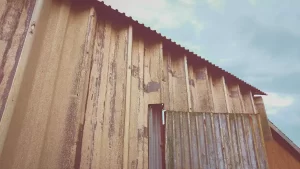
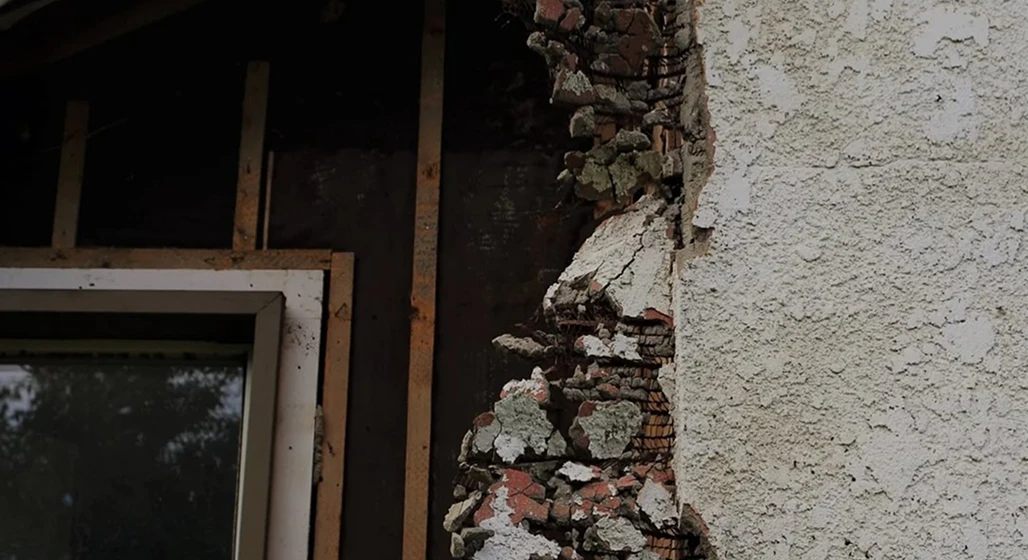
- Cement materials: Asbestos was used in cement siding, roofing, and other structural materials for its fire-resistant properties.
- Wallboard and joint compounds: Asbestos-containing joint compound was used in drywall finishing before the 1980s. Cracks or damage to the drywall can expose asbestos fibers.
If any of these materials are present in your building and show signs of deterioration, such as crumbling, cracks, or visible wear, it is highly recommended to have them tested for asbestos. Even if the materials appear intact, asbestos fibers can still be released if disturbed.
Immediate Steps When You Suspect Asbestos
Once you suspect that asbestos may be present, it’s crucial to take immediate steps to prevent exposure to harmful fibers. The priority is to ensure safety for yourself, your employees, tenants, or anyone else in the building. Here’s what to do:
- Do not disturb the materials: Whether it’s a ceiling tile, insulation, or floor covering, avoid disturbing any potentially asbestos-containing material. Do not attempt to remove, cut, scrape, or sand materials, as this can release harmful fibers into the air.
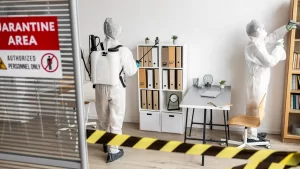
- Restrict access to the area: If the area is accessible to people, it’s crucial to block off the space to prevent anyone from accidentally disturbing the material. Use barriers or warning signs to keep people out of the affected areas.
- Avoid cleaning the area: Do not sweep, vacuum, or use a regular cleaning method on the area. Traditional cleaning methods like sweeping or vacuuming can stir up asbestos dust, spreading it through the air and to other parts of the building.
- Inform everyone in the building: Notify employees, tenants, or any individuals who may occupy or use the building about the potential asbestos hazard. Let them know not to enter the affected area and to report any concerns.
Taking these precautions is crucial to avoid exposure until a certified professional can assess the situation.
Why Professional Help Is Essential
Handling asbestos is not something that should ever be attempted without the proper training, equipment, and certification. Trying to identify or remove asbestos without professional help can have serious consequences:
- Health risks: Asbestos fibers are microscopic and, when airborne, can be inhaled into the lungs. These fibers can cause long-term health issues, including lung cancer, mesothelioma, and asbestosis, a chronic respiratory disease. Even brief exposure can lead to serious health conditions later in life.
- Legal and regulatory requirements: Asbestos removal is governed by strict federal and state regulations. OSHA and the EPA enforce these regulations to ensure that asbestos removal and management are done safely and in compliance with the law. DIY asbestos removal may violate these regulations and result in significant fines or legal liabilities.
- Contamination of other areas: Improper handling or removal of asbestos can result in contamination spreading throughout the building. For example, asbestos fibers may be carried by HVAC systems or carried on clothing or equipment, contaminating previously unaffected areas.
- Increased liability: If asbestos is mishandled, building owners can face lawsuits from tenants, employees, or others who may have been exposed to hazardous asbestos fibers.
For these reasons, it is critical that asbestos testing and removal be handled by certified professionals who understand how to properly manage, contain, and remove the hazardous materials.
Contacting a Certified Asbestos Professional
The safest way to address suspected asbestos in your commercial property is to work with a licensed asbestos professional. These experts are trained to handle inspections, testing, and removal in compliance with all local, state, and federal regulations.
A qualified asbestos contractor will typically:
- Conduct a thorough inspection to identify potential asbestos-containing materials.
- Collect samples safely for laboratory testing.
- Analyze the results and provide a detailed report.
- Recommend the appropriate course of action, whether that involves monitoring, encapsulation, or full removal.
Working with a reputable, certified company ensures the process is completed safely and legally. California Certified offers comprehensive asbestos inspection and removal services for commercial properties and can provide guidance on next steps.
Understanding Your Asbestos Inspection Results
Once the asbestos inspection and testing are complete, you will receive a detailed report from the contractor outlining the findings. The report will typically include:
- Presence and type of asbestos: Asbestos can be found in several types of materials, including chrysotile, amosite, and crocidolite. Each type poses a different level of risk depending on its form and condition.
- Condition of the material: The report will describe whether the asbestos-containing material is friable (easily crumbled and releasing fibers into the air) or non-friable (more stable and less likely to release fibers unless damaged).
- Location and extent of contamination: The inspection report will list the specific areas where asbestos was found and the extent of contamination in each area.
- Recommendations for action: Based on the severity of the issue, the contractor will recommend further actions. These can range from periodic monitoring of the material (if it’s in good condition) to full removal or encapsulation.
Understanding this information helps you make informed decisions about how to proceed, whether through encapsulation, removal, or additional testing and monitoring.
Planning for Commercial Asbestos Removal
If the inspection indicates that removal is necessary, the next step is to carefully plan the asbestos abatement process. Commercial removal must follow strict safety protocols to protect occupants and ensure compliance with regulations.
A licensed asbestos contractor will typically develop a detailed abatement plan that includes:
- Containment procedures: Sealing off affected areas to prevent fibers from spreading.
- Negative air pressure systems: Ensuring airborne fibers do not escape the work zone.
- HEPA filtration: Capturing any airborne asbestos fibers during removal.
- Safe removal techniques: Carefully handling materials to minimize fiber release.
- Proper disposal: Transporting asbestos-containing materials to approved disposal facilities.
California Certified provides detailed guidance and professional services to ensure the process is handled safely.
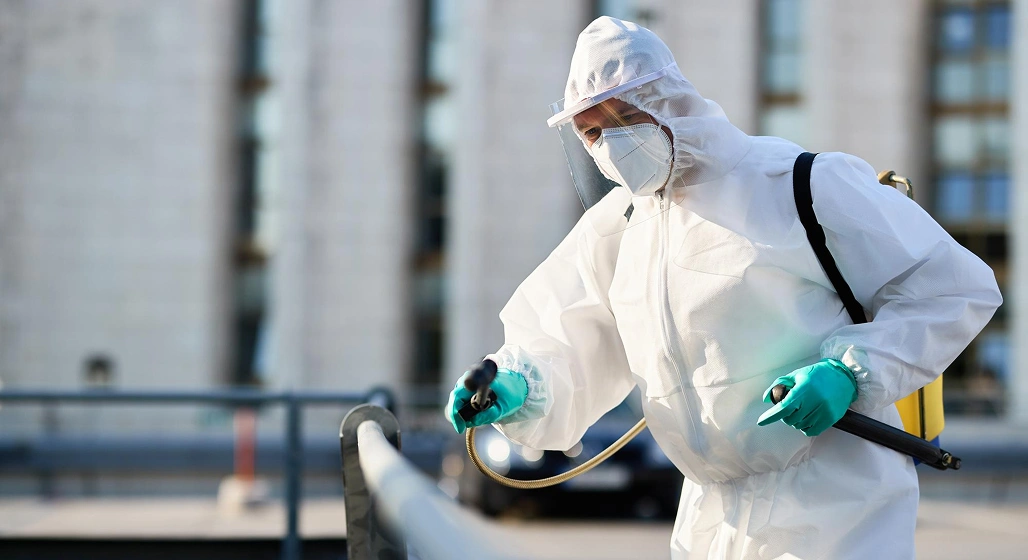
Preparing Your Property and Occupants for Abatement
Before any abatement work can begin, it’s essential to prepare the building and its occupants. This ensures the removal process goes smoothly and that everyone remains safe throughout.
Steps to take before starting the removal process:
- Schedule work during off-hours: To minimize disruption, try to schedule the abatement process during times when the building is not heavily occupied, such as weekends or evenings.
- Notify building occupants: Ensure that tenants, employees, and anyone else using the building are informed about the asbestos abatement. Provide them with details about when the work will take place and how it will affect the building.
- Protect or remove sensitive equipment: If any sensitive equipment or furniture is in the work zone, it should be moved to a safe location or covered to prevent contamination.
- Seal off HVAC systems: HVAC systems in or near the work area should be turned off and sealed to prevent asbestos fibers from spreading through the air ducts.
Proper preparation helps ensure the safety of all building occupants and minimizes disruptions during the abatement process.
What to Expect During Asbestos Abatement
The asbestos removal process is highly controlled to ensure that fibers are not released into the air and that the surrounding areas are kept safe.
Here’s what you can expect during abatement:
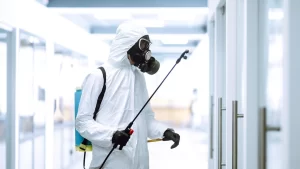
- Containment zones: The work area will be sealed off using heavy-duty plastic sheeting, and access will be limited to trained abatement workers.
- Negative air pressure systems: These systems will continuously draw air from the containment area to prevent fibers from escaping.
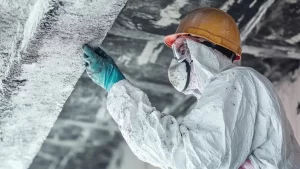
- Removal procedures: Certified asbestos abatement workers will carefully remove the asbestos-containing materials using wet methods to minimize fiber release.
- Air monitoring: Throughout the process, air quality will be monitored to ensure that asbestos fibers do not escape the work zone.
Once the asbestos has been removed, the area will be thoroughly cleaned, and additional air quality tests will be conducted to confirm that it is safe for reentry.
Post-Removal Verification and Safe Reopening
After the asbestos has been removed, the final step is to ensure that the area is completely safe for occupancy again. This includes thorough cleaning, testing, and verification.
To confirm the space is safe:
- Air quality testing: Final tests will measure the concentration of asbestos fibers in the air to ensure they are within safe levels.
- Surface cleaning: The area will be thoroughly cleaned to remove any residual fibers.
- Clearance certificate: Once testing confirms the area is safe, you will receive a clearance certificate, allowing the building to be reoccupied.
Preventing Future Asbestos Risks
Even after the removal, it’s important to be vigilant. Regular inspections, monitoring, and appropriate preventive measures will help ensure that asbestos risks are kept to a minimum moving forward.
By scheduling routine asbestos evaluations and ensuring that building occupants are aware of proper handling practices, you can maintain a safe and compliant environment for your business.
Dealing with suspected asbestos in a commercial property can be stressful, but taking the right steps helps ensure the safety of your building and everyone inside. Prioritizing professional inspection and properly certified removal services is key to managing risks, staying compliant with regulations, and avoiding potential liabilities. California Certified offers expert guidance and services for asbestos inspection and removal in commercial settings, helping property owners handle the process safely.